Table of Contents
There’s something undeniably cozy about a wood fire. The crackling, the smell, the whole ritual of it. But if you’ve spent a winter hauling logs, cleaning out ash, or fighting a stubborn damper, you’ve probably wondered whether it’s worth converting a wood-burning fireplace to gas. For many homeowners across Central Indiana, the answer has been yes.
Many homeowners ask whether they can convert a wood fireplace to gas without losing the look of a real flame. In most cases, the answer is yes, and the upgrade tends to make everyday life noticeably easier. At Godby Hearth & Home, we’ve helped countless families in Indianapolis, Carmel, Fishers, Westfield, Noblesville, and the surrounding communities make this switch. It’s one of the more common projects we handle, and the results speak for themselves.
Here is a clear look at how the wood-burning fireplace to gas conversion process works, what it costs, and what you actually gain. For many households, converting a wood-burning fireplace to gas is less about aesthetics and more about everyday comfort and reliability.
What Are Your Conversion Options?
The two most popular approaches are a gas fireplace insert and gas log sets. Most systems run on natural gas or propane, depending on the fuel service available. Which one makes sense depends on your existing fireplace structure, how much heat you want, and your budget.
Gas fireplace inserts slide directly into your existing firebox, transforming it into a sealed, high-efficiency heating unit. To install a gas insert in a wood-burning fireplace, a technician fits a chimney liner for the gas insert that runs up through the existing flue, handles the gas line connection, and ensures the venting system meets all fireplace venting requirements. A direct-vent gas insert pulls combustion air from outside and exhausts through the same sealed pathway, making it both efficient and safe. Many inserts include a blower kit that distributes heat more effectively throughout the room.
When homeowners want to convert a wood-burning fireplace to a gas insert, they typically gain meaningful BTU output, a high efficiency rating, and far more reliable heating performance compared to an open wood fire. Brands like Heat and Glo are known for long-term reliability and strong efficiency numbers, which is why they’re a common choice among Central Indiana homeowners.
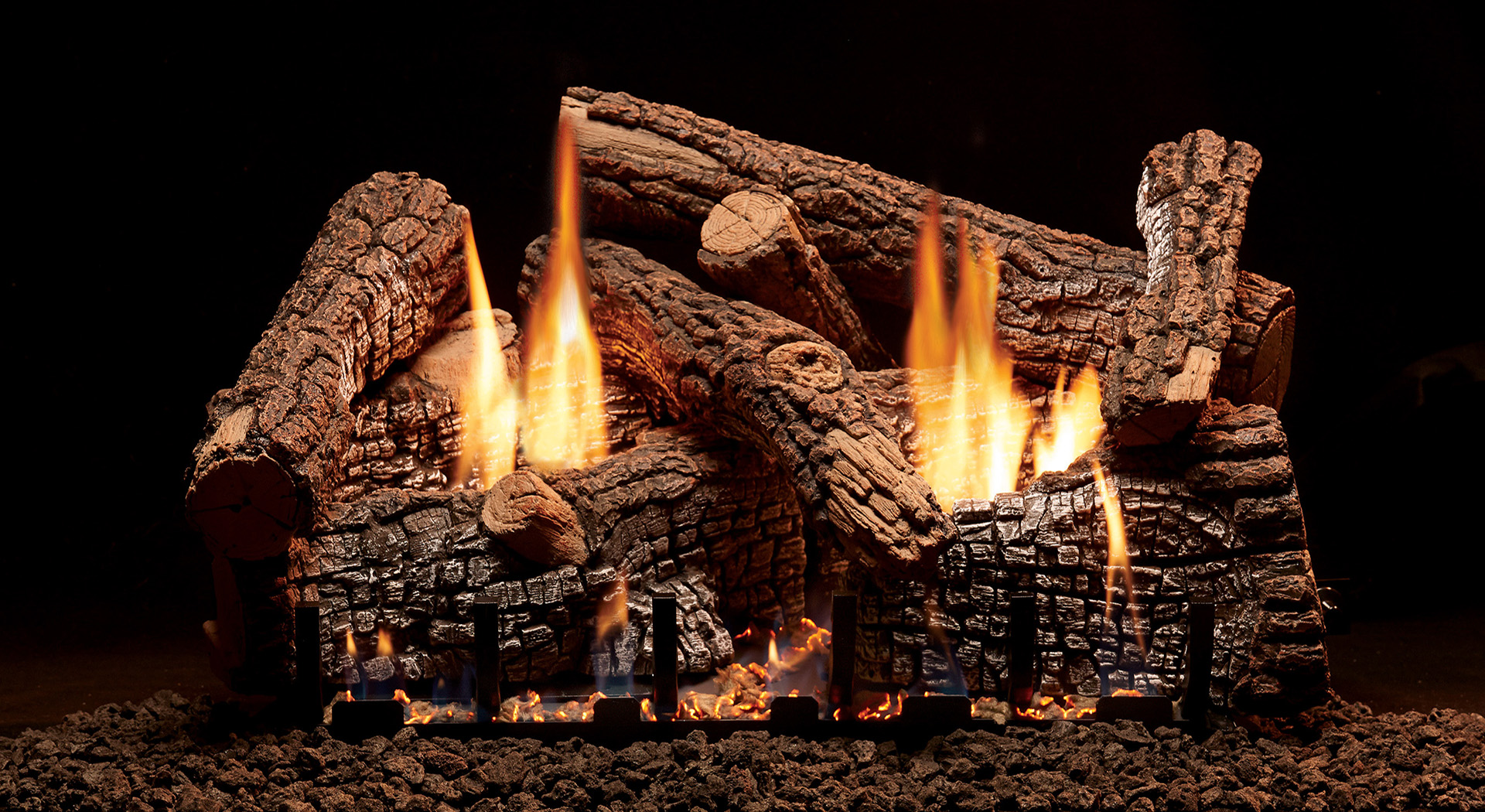
Gas log sets are a simpler, less expensive option. Some homeowners simply want to convert a wood fireplace to gas logs while keeping the open hearth appearance, and for that purpose, gas log sets work well. Vented gas logs sit in the existing firebox and use the existing chimney for venting. They look realistic and provide ambiance and warmth, though they’re not designed to heat large spaces the way an insert can.
Is Your Fireplace a Good Candidate for Gas Conversion?
This is the question worth asking before anything else. Most wood-burning fireplaces can be converted to gas, but the specifics matter.
Masonry fireplaces are the most common starting point. They’re generally good candidates, though older ones sometimes need chimney repairs or a new liner before installation. The firebox condition, damper function, and flue integrity all factor into what the job requires.
Prefab fireplaces can also be converted, but they have their own set of requirements. Not every insert fits every prefab unit, so a proper evaluation is essential.
Beyond fireplace type, a few other factors determine feasibility. The venting system needs to support gas operation, which often means installing a chimney liner for the gas insert. Combustion air supply must meet code. Clearances to combustibles have to be confirmed. And gas line access affects both cost and installation complexity.
A professional fireplace inspection is the right place to start. It tells you exactly what your fireplace needs and what options are available before any money changes hands.
How the Conversion Process Works
Many people imagine a fireplace conversion as a simple equipment swap. In practice, there’s quite a bit happening behind the scenes, and every step exists for a reason.
It starts with a full inspection. Our technicians examine the firebox, damper, flue condition, and chimney structure before recommending anything. This tells us whether the fireplace can be converted to gas, what prep work is needed, and which system will perform best in your specific setup.
If a gas line isn’t already present, we handle that too. Our team sizes and routes the line correctly, installs a shutoff valve and sediment trap, and runs a gas pressure test to confirm safe fuel delivery. The distance from your existing gas main affects both the timeline and the overall cost.
Venting is where a lot of the technical work happens. For insert installations, we typically install a chimney liner for the gas insert to protect the chimney structure and ensure exhaust leaves the home safely. We also confirm that combustion air supply meets code requirements at this stage.
Once everything is prepared, we install the system. That means fitting the insert or log set, sealing all connections, testing the ignition system (millivolt or electronic), and wiring any blower components.
We close out every job with permits, inspections, and safety checks. Our installers handle all permit and inspection requirements under local codes in Marion, Hamilton, and surrounding counties. Carbon monoxide safety testing and a full system verification are standard on every installation. Homeowners searching for fireplace conversion professionals near you should expect nothing less from whoever they hire.
What Does It Cost?
The gas fireplace conversion cost varies based on the type of system, the condition of the existing fireplace, and whether a new gas line needs to be run. Here are general ranges for Central Indiana homeowners.
Gas log installation typically runs $500 to $1,500, including labor, depending on the log set selected and any prep work required. It’s the more affordable path and involves less structural change to the existing fireplace.
Gas insert installation costs generally range from $3,000 to $7,500 or more, covering the unit itself, the chimney liner, gas line work, and labor. Higher BTU output and higher efficiency rating models sit toward the upper end of that range.
Gas line work, if needed, adds roughly $200 to $800, depending on distance and access.
A fireplace conversion quote specific to your home will always be more accurate than a national average. A house in Zionsville with an older masonry fireplace and no existing gas line has a different cost profile than a newer build in Westfield with a prefab unit and a nearby gas stub-out. Getting that quote after an in-home inspection is the right way to budget.
The Benefits of Making the Switch
For many households, upgrading older wood-burning fireplaces to gas improves comfort, efficiency, and everyday usability. So why do so many homeowners go ahead with it? A few reasons come up consistently in the conversations we have.
Consistent heat. Gas burns predictably. The moment you turn the system on, you have warmth. No waiting for wood to catch, no temperature swings as the fire dies down. Many homeowners are surprised by how much usable heat a sealed insert produces compared to an open wood-burning fire, which loses much of its warmth up the chimney. For a cold January evening in Indianapolis, that difference is noticeable.
Cleaner burn. Natural gas produces far fewer particulates than wood. That means no creosote buildup in the flue, less chimney maintenance over time, and better indoor air quality day to day. For households with respiratory sensitivities, this matters more than almost anything else. There are also broader environmental benefits, as gas burns significantly cleaner than wood.
Convenience that adds up. No wood storage, no ash cleanup, no smoke management. Modern ignition systems make starting a fire a one-step process, and most gas fireplace inserts include remote or thermostat controls. It’s a small thing until you’ve used it every day for a winter.
Safety you can count on. Sealed combustion, controlled airflow, and built-in shutoff systems make gas fireplaces safer for regular use than an open wood-burning fireplace. Carbon monoxide safety remains important regardless, which is why we include safety testing as a standard part of every installation we complete.
A genuine home value add. An updated gas fireplace tends to be a selling point, not a question mark. Most buyers in this market appreciate not inheriting a wood-burning maintenance project, and a high-efficiency insert in a well-maintained firebox reads as a feature.
For homeowners who have wondered whether electric fireplaces might be a simpler path, they’re worth considering if gas service isn’t available. But for those who want the fireplace to function as a real heat source, a gas insert typically delivers more value over time.
Ready to Take the Next Step?
If you’ve been thinking about a fireplace conversion in the Indianapolis area, you don’t have to figure it out alone. Many homeowners searching for fireplace conversion near you start with an in-home inspection to understand what their fireplace needs. The team at Godby Hearth & Home has been helping Central Indiana homeowners through this process for decades. We carry quality gas fireplace inserts, gas log sets, and everything needed for a proper installation. Our certified installers follow manufacturer specifications and local building codes to ensure safe operation long-term.
Both of our showrooms, on Rockville Road in Indianapolis and on Rangeline Road in Carmel, have burning units on display so you can see what you’re actually getting before you commit. Some homeowners visit after searching for gas fireplace inserts near them to compare heat output and design options in person. Stop in or reach out to request a fireplace conversion quote. Whether your fireplace is in a 1970s ranch in Marion County or a newer build in Hamilton County, we’ll give you a straight answer about what the conversion involves and what it will cost.
FAQs
Can any wood-burning fireplace be converted to gas?
Most can, but not without a proper evaluation first. The firebox condition, chimney structure, and venting system all determine what the job requires. A masonry fireplace and a prefab fireplace each have different considerations, and a professional inspection confirms what’s possible before any work begins.
Do I need a chimney liner for a gas insert installation?
In most cases, yes. A chimney liner for a gas insert protects the chimney structure and ensures safe exhaust removal. Your installer will confirm whether one is required during the inspection.
What does a gas fireplace conversion cost?
Gas log installation typically runs $500 to $1,500. A gas insert installation generally costs between $3,000 and $7,500, depending on the unit and the required installation. A detailed fireplace conversion quote, based on an in-home inspection, gives you the most accurate number.
Do I need a permit for a gas fireplace conversion?
Yes, in most jurisdictions across Central Indiana. Gas line installation and fireplace work require permits and inspections. A professional installer handles this as part of the job, protecting you and ensuring everything meets code.
How long does the conversion process take?
Most installations take one to two days after permits are in place. Jobs that require a new gas line or a chimney liner installation may take longer. Your installer will give you a timeline after the initial evaluation.
What's the difference between vented gas logs and a gas fireplace insert?
Vented gas logs sit in the open firebox and use the existing chimney for exhaust. They prioritize appearance and are simpler to install. A gas fireplace insert is a sealed unit that fits inside the firebox and delivers significantly more heat output and a higher efficiency rating. The right choice depends on whether you want ambiance or a functional heat source.
Is natural gas or propane better for a fireplace conversion?
Both work well. Natural gas is typically less expensive if your home is already connected to a gas main. Propane is a practical option for homes in rural parts of Hamilton County or elsewhere without natural gas service. Your installer can configure the system for either fuel type.