Table of Contents
Walk through any backyard in Indianapolis or Carmel after a few summers, and you’ll notice something interesting. Some charcoal grills still look sharp, with grates that wipe clean and a lid that closes tight. Others, bought around the same time, are rusted through, wobbly, and headed for the curb. The difference rarely comes down to luck. It comes down to what’s underneath the paint and how that grill holds up in real weather.
Charcoal grill lifespan is one of those things people don’t think about until they’re shopping for a replacement, usually after learning the hard way how long a charcoal grill should last versus how long theirs actually did. So, how long do charcoal grills last, and what makes a charcoal grill last longer than the one sitting two houses down? The answer comes down to material choice, build quality, and the amount of weather protection a grill gets along the way.
Why Some Grills Outlast Others
Charcoal grill durability isn’t a single feature, whether you’re talking about a basic charcoal BBQ or a premium outdoor charcoal grill loaded with accessories. It’s the sum of several smaller manufacturing decisions made long before the grill reaches a showroom floor. Metal gauge, grill construction quality, coating type, and hinge design all shape grill longevity, and two grills can look identical in the showroom yet age very differently once they’re outside in Central Indiana weather for a few years.
Heat is part of the equation, too. Every cook puts metal through a stress cycle, expanding under fire and contracting once it cools. Thin material handles stress poorly, while heavier-gauge steel, denser cast iron, or the solid ceramic body used in kamado-style grills tolerates it better. That’s a big part of why some charcoal grills last longer than others.
Steel Quality Sets the Foundation
Most charcoal grills are built primarily from steel, but not all steel performs the same. Heavy-gauge steel resists denting, warping, and rust far longer than the thin sheet metal used in budget models, and stainless steel takes that further. Higher grades, the kind labeled 304 stainless on better grills, contain more nickel and chromium, which is what gives them strong corrosion resistance through humid Indiana summers and cold winters alike. The thinner 430-grade stainless steel, often used on cheaper finishing pieces, offers less protection and holds up considerably less well under the same conditions.
Coating matters as much as thickness. Porcelain-coated steel adds a hard, glass-like layer that resists rust as long as the surface remains intact, but once it chips, the exposed metal underneath corrodes quickly. Powder-coated steel works well for the frame and lid, holding color and resisting scratches better than basic paint, and it serves as a reasonably rust-resistant charcoal grill component. Cast aluminum skips the rust issue entirely, since aluminum doesn’t contain iron. The most durable grill materials are usually combined strategically rather than relying on a single cheap option.
Welds Beat Bolts and Screws
Look closely at how the body of a grill is assembled. Welded construction creates a single continuous piece of metal, with no seams for moisture to creep in. Bolted or screwed construction leaves tiny gaps at every connection point, where water can get in and cause rust from the inside out, often before it’s visible.
This is one of the bigger differences between a heavy-duty charcoal grill and a bargain outdoor grill that falls apart within a couple of seasons. A welded firebox or leg assembly holds its shape under heat and resists the wobble that loosens bolted joints over time. Grill frame durability often comes down to this single manufacturing choice.
Why Fireboxes Wear Out First
The firebox and charcoal tray take more abuse than almost any other part of the grill, sitting in direct contact with burning charcoal every cook. They absorb that expand-and-contract stress more than any other component, cook after cook. Thin metal here warps faster and develops gaps that let smoke and heat escape where you need them contained.
A thicker charcoal grate and a solid charcoal tray hold their shape far longer, keeping airflow consistent. The ash pan matters too. A flimsy one rusts out within a year or two, while a heavier one handles ash removal and moisture exposure without falling apart.
Grates Wear Differently Over Time
Cooking grates are usually the first part of any charcoal grill to show wear, and that’s expected even on a well-built model. Cast iron cooking grates retain heat exceptionally well and produce a great sear, but need occasional seasoning to keep surface rust at bay. Porcelain-coated grates resist rust more consistently, though the coating can chip if scrubbed with metal tools or a stiff wire brush.
Replacing grill grates eventually is a normal part of charcoal grill care, not a sign that something went wrong. A well-built unit keeps the firebox, frame, and lid solid for years after the original grates are replaced.
Why Lids and Hinges Fail
A grill’s lid does more than keep food covered. It traps heat, manages airflow, and protects the cooking surface. Lid construction with a tight seal and dense material improves heat retention far better than a thin, lightweight lid that warps under sustained heat.
Hinge assembly quality shows up fast, with cheap hinges sagging within a season or two, and the seal going with them. Adjustable vents matter just as much, since rust or warping can seize them shut and ruin temperature control for good. Even a built-in temperature gauge is worth checking, since a stuck one indicates moisture where it shouldn’t be.
Midwest Weather Takes a Toll
Homeowners across Central Indiana often leave grills outdoors year-round, and Midwest weather doesn’t make that easy on equipment. Humidity and rain drive oxidation on exposed metal, while freeze-thaw cycles through an Indianapolis winter stress welded joints and grates that handled summer cooking just fine. UV exposure fades and weakens plastic handles, wheels, and side shelves faster than most people expect.
The same conditions occur just as often in Fishers, Westfield, or Noblesville, with slightly different schedules depending on how exposed a patio is. What causes charcoal grills to rust almost always traces back to some combination of these factors working on the metal at once.
A Cover Changes Everything
This isn’t meant to turn into a grill maintenance guide, since that deserves its own conversation. But one habit makes a real difference in how to make a charcoal grill last longer. A properly fitted protective grill cover offers genuine rust prevention by blocking moisture and sun exposure, which are behind most early failures.
Storing the grill somewhere covered during the harshest winter months helps too, and counts as basic seasonal maintenance. It buys real time against the freeze-thaw cycle and grease buildup that otherwise work on the metal all winter.
Signs Your Grill Is Aging
Knowing the signs a charcoal grill is wearing out can save you from paying for repairs that won’t fix the underlying problem. Surface rust on grates is normal and usually cleanable. Watch instead for corrosion spreading across the main body, a vent that won’t turn, or a hinge that’s gone loose. Holes in the firebox letting smoke escape from somewhere other than the vents mean the metal underneath has given out.
Replacement parts can often extend a grill’s working life while the frame is still solid. Once the frame itself is compromised, repair no longer makes sense.
Built For the Long Run
What affects charcoal grill lifespan ultimately comes down to a handful of decisions made before you ever bought it. Heavy-gauge or cast materials, welded seams instead of bolted ones, and components built to handle Midwest weather will always outperform a cheaper model dressed up to look similar on a showroom floor. As a rough benchmark, a well-built steel grill typically lasts 8 to 15 years with reasonable care, while a thin, budget model often needs replacing in 3 to 5 years. A manufacturer’s warranty is worth checking, too, since it usually signals how confident a company is in its own grill build quality.
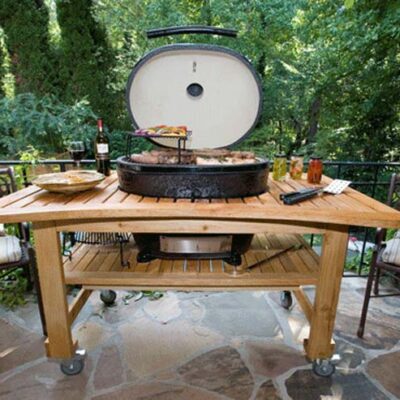
Ceramic kamado-style grills take this further. With no exposed steel body to corrode, the ceramic shell can outlast almost everything else in the backyard, often running 20 years or more. Even there, the metal bands, hinges, and latches holding it together are still exposed steel, and they’re usually the first thing to need attention. Whatever style you land on, the construction underneath matters more than anything printed on the box.
Find a Grill Built to Last
If you’re shopping for a charcoal grill that’s actually built to handle an Indiana backyard, our team at Godby Hearth & Home can walk you through the differences in person. Stop by our Rockville Road showroom in Indianapolis or our Carmel location, and we’ll help you compare materials and construction side by side so you leave with a grill that fits how you actually cook, not one you’ll replace in two years.
Request a Quote
FAQs
How long do charcoal grills last?
Anywhere from 3 to 20 years, depending almost entirely on what it’s made of. A well-built steel grill typically runs 8 to 15 years with reasonable care. Thin, budget steel often gives out in 3 to 5. Ceramic kamado bodies are the outlier here, frequently lasting 20 years or more, though their metal hardware, hinges and bands especially, usually needs attention long before the ceramic itself does.
What causes charcoal grills to rust?
Moisture meeting bare metal, over and over. Humidity, rain, condensation, even damp ash sitting in the firebox, it all adds up. The fastest path to rust is usually coating damage, something like a chipped porcelain finish that leaves raw steel exposed underneath.
What's the most durable material for a charcoal grill?
Cast iron and heavy-gauge stainless steel are the longest-lasting choices for parts that take direct heat. Ceramic kamado bodies sidestep the rust question entirely. Cast aluminum holds up well too, for components that don’t need to handle flame contact.
How can I make my charcoal grill last longer?
A quality cover, storing it somewhere protected in winter, and clearing ash regularly all help. None of that matters as much as the grill itself, though. Welded construction and heavier materials from the start will outlast any amount of careful upkeep on a thin, bolted model.
Are kamado-style grills more durable than kettle grills?
Usually, yes. Ceramic just doesn’t rust the way steel does. A good steel kettle grill can still go the distance, but it needs more consistent weather protection to keep pace with what a kamado does almost effortlessly
What are the signs a charcoal grill is wearing out?
Rust spreads across the main body rather than just the grates. A vent that won’t turn. A hinge that’s gone loose. Holes burned through the firebox. Any of those is worth a closer look. If the frame is still solid, replacement parts can often fix the problem. Once the frame itself has given out, it’s time for a new grill instead of another repair.