Table of Contents
Homeowners across Indianapolis and Carmel often ask the same question when they visit our showroom. Is a ceramic grill worth the move away from the steel charcoal grill they already own? Set Primo grills vs charcoal grills side by side, and the construction differences explain most of the answer. A traditional charcoal grill grills well, but a Primo ceramic grill holding a steady 225 degrees for six hours without anyone adjusting a vent is a different kind of cooking experience entirely. Primo ceramic grills have become one of the most requested upgrades at our Indianapolis and Carmel locations, with homeowners from Fishers to Zionsville making the switch for reasons that go well beyond flavor. Here is what actually separates a Primo charcoal grill from the kettle or barrel-style grill found in most Central Indiana backyards today.
The Ceramic Shell Changes Everything
A typical outdoor charcoal grill is built from thin steel walls, occasionally with a layer of porcelain enamel for a bit more protection. That metal heats up quickly and cools just as fast, so wind, rain, or a cool autumn evening can pull an entire cook off track. Primo grills are built from thick ceramic instead, and that ceramic shell carries far more thermal mass. It absorbs heat slowly and radiates it back evenly across the whole cooking surface, which translates into less charcoal burned per cook and noticeably fewer temperature swings. Over the course of a grilling season, improved fuel efficiency becomes noticeable, since the ceramic does more of the work that a thin metal grill must make up for extra charcoal. The ceramic also supports better moisture retention, so meat tends to come off the grill juicier than it would on a thinner metal surface. Weather resistance follows the same logic. A Primo ceramic grill left on a Noblesville patio through a Midwest winter holds up considerably better than a thin-walled charcoal grill exposed to the same conditions.
A Patented Oval Shape
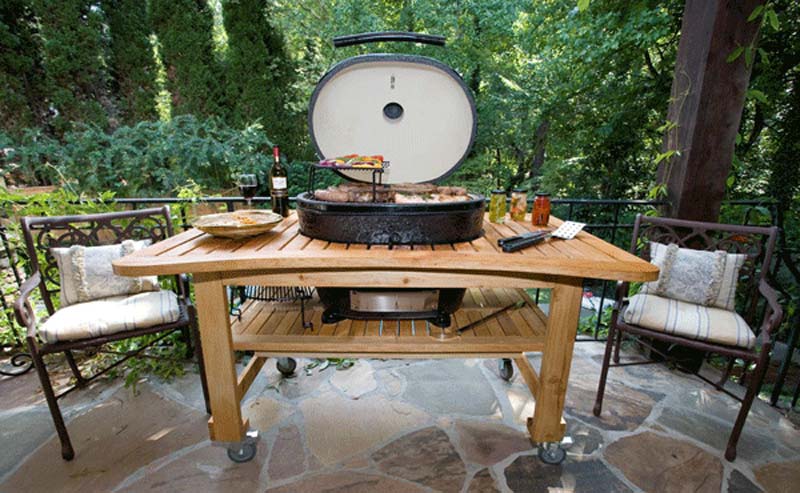
Most kamado-style grills, including the Big Green Egg, keep the round shape that defines the traditional kamado form. Primo took a different approach. Its patented oval design stretches the cooking space lengthwise, adding meaningful cooking area without requiring a larger footprint, and it makes long cuts like ribs or a beer can chicken easier to reach without leaning over an open fire. That same patented oval shape also simplifies what’s commonly called two-zone cooking. A divider slides into the firebox; lump charcoal goes on one side, and the result is direct-heat cooking for searing on one half while the other half handles indirect-heat cooking for roasting or finishing a dish low and slow. A round charcoal grill can approximate this setup with extra hardware, but the oval shape was built around it from the start.
One Grill, Several Jobs
A Primo outdoor grill handles direct grilling just as well as a standard charcoal BBQ, but its range extends much further from there. With heat deflectors and cast-iron cooking grates in place, the same grill becomes a smoker for ribs or brisket. Lower the temperature, and it manages an overnight pork shoulder with little supervision; raise it instead, and it holds steady heat for baking pizza near 600 degrees. Cast iron retains heat exceptionally well, which is part of why sear marks tend to come out cleaner than on most charcoal outdoor grills.
A sealed gasket keeps that heat from escaping around the dome, and the charcoal basket and ash tool included with most setups make longer cooks and next-day cleanup easier. A handful of customers who came in looking for a better charcoal grill end up using their Primo primarily as an outdoor oven once they see what it can do.
Temperature Control That Holds
Anyone who has managed a conventional charcoal grill through a long cook knows the real challenge is airflow control. Open the lid too wide and the temperature spikes. Step away for a few minutes, and it drops. Primo’s top vent and bottom vent system, combined with that thick ceramic shell, delivers a level of temperature stability that a typical charcoal grill cannot match. Set the airflow once, close the dome lid, and the grill largely holds its own temperature from there. That stability matters when smoking a brisket overnight or holding a high heat for a Neapolitan-style pizza crust without scorching the bottom.
How Primo Compares to Other Kamados
Customers frequently come in already comparing a Primo model against other kamado grill brands, most often the Big Green Egg. The clearest and most durable Primo grill difference is the oval cooking surface, since most competing kamados, including Big Green Egg and Kamado Joe, stick with the traditional round shape. Primo’s accessory lineup is smaller than those of Big Green Egg and Kamado Joe, and the dome lid on larger Primo models is heavy enough that some owners prefer adding a lift-assist accessory. Most grills in this category perform well once the airflow is dialed in, so the decision usually comes down to which combination of shape and accessories matters most to how a person cooks. Performance matters, but it isn’t the only factor buyers consider.
Is the Switch Worth It
A premium price tag comes with a Primo charcoal grill, and that’s worth acknowledging up front. A buyer who grills occasionally and is satisfied with the results from a basic charcoal grill may not need to spend more. For someone who cooks several times a week and wants one grill capable of smoking, searing, and baking without owning three separate appliances, or who is outfitting an outdoor kitchen meant to last well beyond a typical grill’s lifespan, a premium charcoal grill built for serious cooking justifies its cost. Fuel efficiency factors into that math too, since a grill that needs less charcoal per cook saves money every time it’s lit, not just over the life of the unit. Warranty coverage for ceramic components also tends to run considerably longer than for most metal grills, a detail that speaks to both grill lifespan and the manufacturer’s confidence in the materials.
Basic Care and Upkeep
A Primo grill requires less day-to-day maintenance than most people expect, but a little upkeep helps extend its lifespan in the long run. Emptying the ash from the firebox and charcoal basket every few cooks keeps airflow consistent, and scrubbing the ceramic interior usually isn’t necessary since burning the grill hot for a few minutes does most of that work on its own. The gasket around the dome lid is the one component that wears down over years of use and eventually needs replacing to keep the seal tight. Godby Hearth & Home keeps replacement parts and gaskets for Primo grills in stock, so keeping one running well rarely means tracking a part from out of state.
See One in Person First
Specifications on a page only tell part of the story, which is why working with a local dealer in person makes the decision easier. Standing in front of a Primo oval grill at our Rockville Road grill showroom in Indianapolis or our Carmel location gives a much clearer sense of the cooking space and build quality. Our team can walk through a live product demonstration, compare a Primo model against the gas and charcoal grills already under consideration, and cover grill accessories, replacement parts, and what an outdoor cooking consultation looks like for a specific backyard. Homeowners from Westfield, Avon, and across Central Indiana visit for exactly this reason before making a decision.
If you’re ready to see what a Primo grill can do for your backyard, stop by our Indianapolis or Carmel showroom, or request a quote online, and our team will help you find the right Primo grills for sale to match how you cook.
FAQs
Is a Primo grill worth it compared to a regular charcoal grill?
For most serious cooks, yes. A Primo ceramic grill holds heat more evenly, uses less lump charcoal per cook, and handles smoking, baking, and grilling. A regular charcoal grill costs less and is simpler to use, so the right answer depends on how often you grill and what you want out of it.
Who should buy a Primo grill?
Primo grills tend to make the most sense for people who cook several times a week outdoors, want a single appliance that can move from low-and-slow smoking to high-heat searing, or are setting up a backyard built to last for years rather than seasons. Casual weekend grillers may not need everything a ceramic grill offers.
What's the real difference between a kamado grill and a charcoal grill?
A kamado grill, including Primo’s ceramic models, uses a thick insulated shell that retains heat far longer than the thin steel found in most charcoal grills. That construction difference is the main reason kamado-style cooking can hold low temperatures for hours with very little adjustment.
Are there any downsides to a Primo grill?
A few, and they’re worth knowing before you buy. The dome lid on larger models is heavy, Primo’s accessory catalog is smaller than those of Big Green Egg or Kamado Joe, and the upfront cost is higher than that of a basic charcoal grill. Most owners say the cooking performance outweighs these tradeoffs, but they matter if accessory variety or lid weight is a priority for you.
Do Primo grills only use lump charcoal?
Natural lump charcoal is the preferred fuel over briquettes. Lump charcoal burns hotter, produces less ash, and won’t leave behind the chemical aftertaste that some instant-light briquettes can impart to food.
Can a Primo grill bake pizza?
Yes. With heat-deflector plates installed, a Primo grill holds steady, high heat for baking pizza, often close to what you’d get from a wood-fired oven. Several owners describe it as one of the more unexpected uses for a grill originally bought with steaks and ribs in mind.
Where can I see Primo grills in person near Indianapolis?
Godby Hearth & Home carries Primo grills at our showrooms in Indianapolis and Carmel, and we regularly see customers from Fishers, Noblesville, Zionsville, Westfield, and Avon as well. Our team can walk you through sizes, accessories, and what fits your space.
How long does a Primo ceramic grill typically last?
With basic care, a Primo grill can last well over a decade, and many owners report using the same one for 15 years or more. The ceramic shell doesn’t rust the way steel does, which is a major reason grill lifespan is much longer than on standard charcoal grills.
Can a Primo grill be used year-round through Indiana winters?
Yes. The same ceramic shell that holds steady heat in summer also insulates against cold, so a Primo grill in Indianapolis, Carmel, or anywhere else in Central Indiana can stay in regular rotation through the winter months. Owners often find low and slow cooks even easier to manage once outside temperatures drop, since the ceramic does more of the insulation work on its own.