Table of Contents
Homeowners who visit our Indianapolis and Carmel showrooms often compare grills by a single number. One model lists 48,000 BTUs, the one beside it lists 60,000, and the higher figure looks like the obvious winner. The BTU rating is useful, but it only answers part of the question. Two grills with similar gas grill BTU ratings can cook very differently, usually because of gas grill burner design and the heating system built around the burners.
A BTU rating tells you how much fuel a grill can burn in an hour. It does not tell you where that heat goes, how evenly it reaches the cooking grates, or how well the grill holds temperature on a breezy evening. Those results depend on burner shape, placement in the firebox, and what happens to the heat between the flame and the food.
What a BTU Rating Measures
BTU stands for British Thermal Unit, the energy needed to raise one pound of water by one degree Fahrenheit. On a grill, the published figure is BTU per hour. It reflects the total fuel energy the main burners consume at full output. A four-burner grill rated at 60,000 BTUs, for example, works out to about 15,000 BTUs per burner if the output is split evenly.
The key word is consume. BTUs measure heat input, not the heat that reaches your steak. Part of that energy sears the food, part warms the hood and grates, and part escapes through the vents at the back of the grill. A grill with a large BTU output and a poorly managed heating system can lose a significant share of what it burns. It helps to treat the rating as the grill’s available heating power rather than a grade for how well it cooks.
Why the Number Gets Misread
Higher BTU figures look impressive on a product tag, but a grill with higher burner output can still lose much of that heat if its firebox and hood do not hold it well. Another grill with a modest rating may reach searing temperatures because its firebox retains heat effectively. Chasing the largest number is one habit we cover in what most people get wrong when buying an outdoor grill.
BTU per square inch adds useful context because it accounts for cooking surface area. Dividing the main burner BTU rating by the primary cooking surface lets you compare a compact grill with a much larger one more fairly. Even then, the figure cannot show how evenly heat spreads across the grates or how effectively the grill retains it. Burner layout and the heat management around it determine much of that
How Gas Grill Burner Design Works
A burner mixes gas with air and releases that mixture through a row of small openings called burner ports. Each port feeds a small flame, and together those flames create the heat pattern under the cooking surface. The burner’s shape, port size, and port spacing determine how that pattern looks.
Tube burners are the most common design. These straight pipes with ports along each side are dependable and easy to service, but a single tube concentrates heat in a narrow line. Wide gaps between tubes tend to show up on the food as darker stripes over the burners and lighter areas between them.
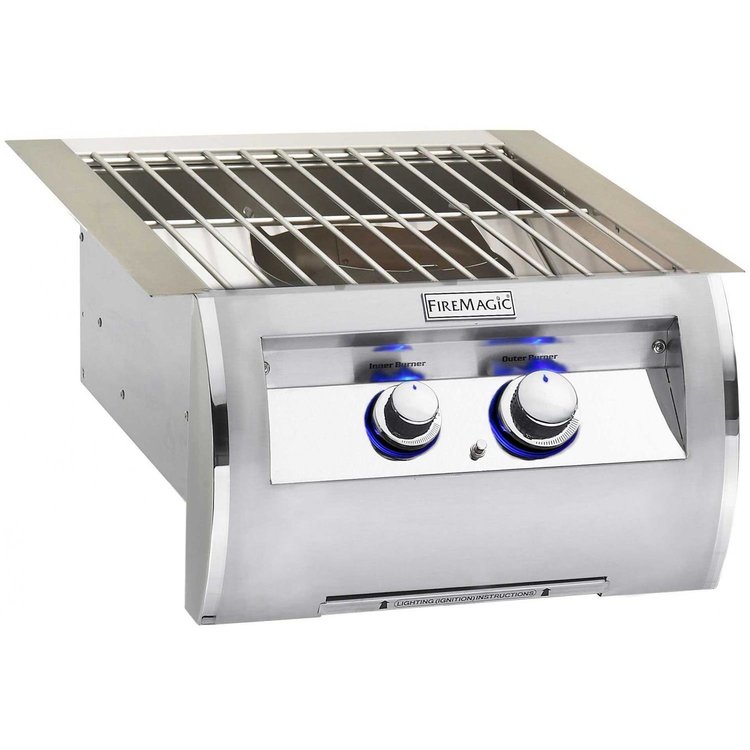
Other designs spread the flame across more of the firebox. Cast burners formed in H, E, or bow-tie shapes cover a wider area from a single control valve. Cast stainless steel burners are also thicker, so they hold their shape under heat and keep port sizes consistent season after season. Infrared burners take a different approach entirely. Rather than heating the air with open flames, they heat a ceramic or metal surface that sends radiant heat directly into the food. That makes an infrared sear burner well suited for high heat searing, though it offers less flexibility for low temperature cooking.
Combustion quality also affects the heat you get. Gas enters each burner through a short venturi tube that pulls in air along the way. With the right air-to-fuel ratio, the flame burns blue and delivers more usable heat. With too little air, it turns soft and yellow and leaves soot behind. Propane and natural gas also burn differently, so a grill has to be built or properly converted for the fuel it uses.
Burner Placement and Spacing
Most grill owners can point to the hottest spot on their grill without hesitation. Not every temperature difference is a flaw, since hotter and cooler areas set on purpose are the basis of good grilling. The problem is uncontrolled hot spots that appear even when every knob is set the same, and burner placement and spacing are often part of the reason.
Burners set close together create overlapping coverage, so the heat blends before it reaches the grates. Burners spaced far apart leave cold spots in the gaps. Coverage from front to back is just as important. A burner that stops a few inches short of the front edge leaves that strip of the grate cooler than the rest, and food placed there cooks more slowly.
Burner configuration also defines your heat zones. Each burner runs on its own control valve, so a well-planned layout gives you finer grill temperature control across the surface. That makes two-zone cooking straightforward. You can run one side hot for direct-heat grilling, keep the other side low or off for indirect-heat grilling, and move food between the cooking zones as it finishes. With only two widely spaced burners, those zones tend to blur together, and the cooler side rarely gets gentle enough for a roast.
Low Heat Matters Too
Conversations about BTUs focus on maximum output, yet much of everyday grilling happens well below full power. High heat is useful for searing, but many foods and slower cooks need steady control at lower temperatures.
A well-designed burner holds an even flame along its full length at a low setting, which keeps chicken, fish, and vegetables cooking steadily without scorching. A poorly designed burner may sputter, go out in a breeze, or burn unevenly when turned down. The published BTU rating reflects maximum output, so it tells you little about how the burner behaves at lower settings.
The Parts Above the Burners
A burner never works alone. Between the flame and the food sit flame tamers or heat diffusers, depending on the grill. These components spread heat sideways and protect the burners from dripping grease. Without them, gas grill heat distribution would follow the flame pattern exactly, including hot spots. Heat shields along the sides and back of the firebox help keep that energy inside the grill.
Grate weight also changes how food cooks. Heavy cast iron or thick stainless steel rods store heat and transfer it to food on contact, which produces clean sear marks. Thinner grates heat quickly but lose their temperature as soon as cold food lands on them.
Above everything sits the grill hood, which traps hot air for roasting and keeps the warming rack useful for buns and sides. A hood that seals properly holds temperatures steady, while one that leaks lets heat escape, so the burners work harder and fuel consumption rises.
How Performance Shows Up
Gas grill heating performance becomes easy to judge during regular use. A well-designed system preheats without running at full output for long, then holds steady. Heat recovery tells you even more. Each time the lid opens, the grill loses heat, and a grill with good heat retention and even burner coverage returns to cooking temperature relatively quickly. A grill that relies on high output burners alone recovers slowly, and the thermometer swings each time.
For everyday cooking, consistent grill temperature across the cooking surface matters most. Even cooking means every burger finishes at about the same time and a salmon fillet cooks evenly from one end to the other. That kind of temperature stability comes from burner coverage and good heat spreading.
Weather adds another factor in Central Indiana. A gusty spring evening in Westfield or a cool October cookout in Zionsville pulls heat from a grill quickly. Grills with solid fireboxes, tight hoods, and well-protected burners hold their cooking temperature through the wind, while lighter builds with exposed burners lose ground regardless of their BTU rating. Homeowners who grill into late fall may also find our guide on how to protect your outdoor grill during Midwest winters helpful.
Fuel Supply and Burner Condition
A grill can deliver its rated output only when it gets enough fuel. For natural gas grills connected to a home’s gas line, an undersized line or one shared with several appliances can keep the burners below their full BTU rating, however well they are designed. A qualified professional should confirm gas line sizing and pressure for any permanently connected grill.
Burner condition has a similar effect. As ports clog with grease or corrode over time, flames grow uneven and new hot spots appear, even on a grill that cooked well when new. Burners made from 304 stainless steel resist corrosion better than painted or plated steel, and a short burn-off after each cook, with periodic brushing of the ports, keeps flame distribution even.
See the Burners Up Close
Specifications describe a grill, but seeing the heating system in person tells you far more. At our Indianapolis and Carmel locations, you can compare burner shapes, spacing, heat diffusers, and grate weight side by side on several gas grills. Our team works with these grills every day and can explain how each one moves heat from the burner to the cooking surface.
Homeowners from Fishers, Noblesville, Avon, and across Central Indiana visit our Rockville Road showroom and Carmel Interactive Studio before deciding. Browse our gas grills online, then stop by to see the parts that determine how they cook.
FAQs
What does BTU mean on a gas grill?
BTU stands for British Thermal Unit. On a gas grill, the rating shows how much fuel energy the main burners can burn per hour at full output. It measures heat input, which tells you how much heat the grill can produce but not how evenly that heat reaches the cooking grates.
Does a higher BTU mean a better grill?
Not on its own. A higher BTU rating means the grill burns more fuel and sets a higher ceiling for how hot it can get, but burner shape, spacing, heat diffusers, and hood fit decide how much of that heat you can actually use. A well-designed burner system with a moderate rating often cooks more evenly than a high BTU gas grill with poor heat distribution.
How many BTUs does a gas grill need?
No single number suits every grill. The right BTU for a gas grill depends on its cooking surface area, how well the burners cover that surface, and how effectively the firebox and hood hold heat. A grill with good burner coverage and a tight hood can cook well at a lower rating than a thin, leaky grill needs.
Why does my gas grill have hot spots?
Hot spots usually come from wide gaps between burners, burners that stop short of the front or back of the firebox, or clogged burner ports. Damaged or missing flame tamers can also allow direct flame to hit the grates in certain areas. Cleaning the ports and checking the diffusers often resolves the problem.
Does burner placement matter on a gas grill?
Yes. Beyond evenness, placement decides how many separate heat zones you can set. For a quick check, lift the grates and diffusers. Burners that reach close to the front and back of the firebox, with modest gaps between them, usually signal good coverage.
Are infrared burners better than tube burners?
They serve different purposes. Infrared burners produce intense radiant heat, which makes them excellent for searing steaks quickly. Tube and cast burners offer a wider temperature range and handle low and slow cooking more easily. Many grills pair a sear burner with conventional burners to cover both cooking styles.
Where can I see gas grill burners in person near Indianapolis?
Godby Hearth & Home has a showroom on Rockville Road in Indianapolis and an Interactive Studio in Carmel. Our team can show you burner designs, diffusers, and grates on several gas grills and explain how each one handles heat.